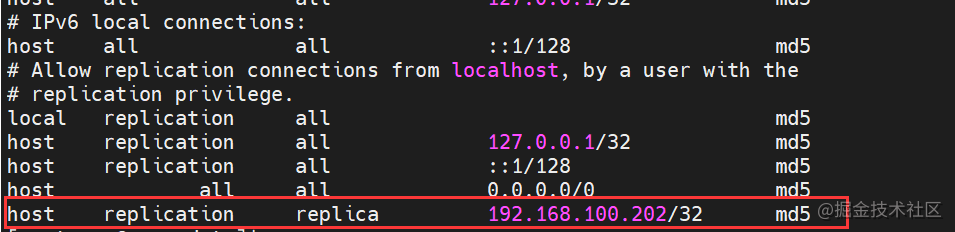
Postgres Create Role Login Encrypted Password Migrating To An Encrypted Postgres RDS Instance Using Replication TP PostgreSQL PORTFOLIO Tim Honchel Software Portfolio PostgreSQL W3c Aurora PostgreSQL pgAudit DevelopersIO 165 1 1 7 PostgreSQL by default w o the encrypted command stores passwords in md5 In the hba conf file you would change trust to md5 The order doesn t matter The host is the IP that the user is attaching from if they are able to attach from any IP you would use 000 0 0 0 0
1 So I have postgresql database and in pg hba conf file I am authenticating users via md5 I typically create users using the command CREATE USER username WITH PASSWORD password From the postgresql website if you don t specify ENCRYPTED or UNENCRYPTED then the default behavior is determined by the configuration parameter password encryption When you create a user using CREATE USER the user automatically gets a LOGIN role postgres CREATE USER percuser WITH ENCRYPTED PASSWORD secret CREATE ROLE postgres select rolcanlogin from
Aurora PostgreSQL pgAudit DevelopersIO PostgreSql CSDN Create Role Or User If It Does Not Exist In PostgreSQL Delft Stack How To Limit Access To Database In PostgreSQL Ubiq BI Solved Get Encrypted Password For PostgreSQL Login Role 9to5Answer Cleverbase Selects Verimatrix Code Shield For Strong Cybersecurity C mo Instalar PostgreSQL Y PhpPgAdmin En Ubuntu 20 04 LTS HowtoForge Pgpool PostgreSQL11 PostgreSQL Media Net Link
Postgres Create Role Login Encrypted Password
 Postgres Create Role Login Encrypted Password
https://blog.sudonum.com/content/images/size/w2000/2021/12/Screenshot-2021-12-13-at-15.14.58.png
It avoids storing the password in plain text It uses the md5 hash algorithm to encrypt the password but know a day it is no longer secure password This method stores the password as plain text
Pre-crafted templates offer a time-saving solution for creating a diverse range of documents and files. These pre-designed formats and layouts can be utilized for numerous individual and expert jobs, including resumes, invitations, leaflets, newsletters, reports, discussions, and more, streamlining the material production procedure.
Postgres Create Role Login Encrypted Password

Postgresql Postgres Unable To Connect To Server Role postgres
PostgreSql CSDN

Create Role Or User If It Does Not Exist In PostgreSQL Delft Stack

How To Limit Access To Database In PostgreSQL Ubiq BI

Cleverbase Selects Verimatrix Code Shield For Strong Cybersecurity
C mo Instalar PostgreSQL Y PhpPgAdmin En Ubuntu 20 04 LTS HowtoForge

Description CREATE ROLE adds a new role to a PostgreSQL database cluster A role is an entity that can own database objects and have database privileges a role can be considered a user a group or both depending on how it is used Refer to Chapter 22 and Chapter 21 for information about managing users and authentication You must have CREATEROLE privilege or be a database

1 Create login roles For example the following statement creates a role called alice that has the login privilege and an initial password Note that you place the password in single quotes Now you can use the role alice to log in to the PostgreSQL database server using the psql client tool It will prompt you for a password

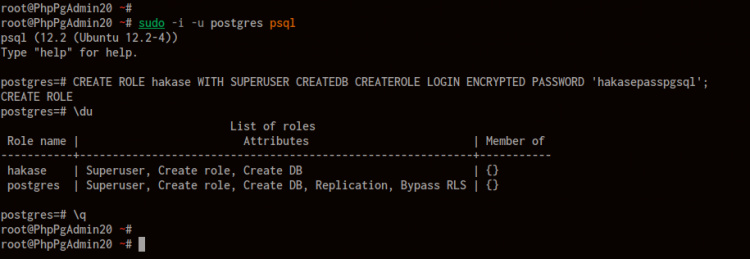
Create a role After you connect with the psql client run the following command to create a role that has the LOGIN attribute and a non empty MD5 encrypted password postgres CREATE ROLE demorole1 WITH LOGIN ENCRYPTED PASSWORD password1 Note The trailing semicolon at the end of the SQL statement is
Notes Use CREATE ROLE to add new roles and DROP ROLE to remove a role ALTER ROLE cannot change a role s memberships Use GRANT and REVOKE to do that Caution must be exercised when specifying an unencrypted password with this command The password will be transmitted to the server in cleartext and it might also be logged in the client s command history or the server log

PostgreSQL database passwords are separate from operating system user passwords The password for each database user is stored in the pg authid system catalog Passwords can be managed with the SQL commands CREATE ROLE and ALTER ROLE e g CREATE ROLE foo WITH LOGIN PASSWORD secret or the psql command password If no password has been set up for a user the stored password is null and
Sudo u postgres createuser e john Alternatively split the command into two parts 1 Switch to the postgres user sudo su postgres 2 Run the createuser command createuser name Postgres automatically creates the user role with login permissions in both cases The only difference is that when the command is spelled CREATE USER LOGIN is assumed by default whereas NOLOGIN is assumed when the command is spelled CREATE ROLE Compatibility The CREATE USER statement is a PostgreSQL extension The SQL standard leaves the definition of users to the implementation
2 After connecting to the database using the admin account execute the following query to create a new role or a new user postgres CREATE role test WITH LOGIN ENCRYPTED PASSWORD password CREATE ROLE postgres q user hostname 3 Check the user by executing the following command or query