Dont Vs Didnt Don t And Doesn t In English Simple Present Tense Negative Don t Vs Doesn t In English Simple Present Tense ESL ESOL Don t And Doesn t In English Simple Present Tense Negative Facebook Woodward English On Instagram NEW LESSON Don t And Doesn t In Both don t and doesn t are contractions using the verb do and the word not It s easier to see which one is the correct choice if you expand the contractions don t is a contraction of do not and doesn t is a contraction of does not We know that a verb with a third person singular subject gets an s or es on the end in the simple
Http www engvid DO is a very simple verb in English that is used all the time In this simple grammar lesson I explain how to use it easily and wi The most formal way of saying this is I d rather you not smoke The verb smoke is in the subjunctive and is not marked for person or number so you could also say I d rather she not smoke As a short answer you can say I d rather you not Both I d rather you didn t smoke and I d rather you
Woodward English On Instagram NEW LESSON Don t And Doesn t In Don t Vs Doesn t In English Simple Present Tense YouTube An English Poster With Words And Pictures On It That Say Don t Doesn t Don t And Doesn t In English Simple Present Tense Negative Don t And Doesn t In English Simple Present Tense Negative Don t And Doesn t In English Simple Present Tense Negative Don t And Doesn t In English Simple Present Tense Negative NEW LESSON Don t And Doesn t In Woodward English What Is The Difference Between dont And didnt dont Vs didnt
Dont Vs Didnt
 Dont Vs Didnt
https://i.pinimg.com/736x/02/b2/94/02b2944fc9e87d1bc03b7ea53bb4ef08.jpg
You speak English You don t speak English We do not say I no speak English NOT correct We say I don t speak English Correct We normally use Don t or Doesn t to make a negative sentence in the simple present tense Let s look at the difference between DON T and DOESN T
Pre-crafted templates use a time-saving service for developing a varied range of documents and files. These pre-designed formats and layouts can be utilized for different individual and expert tasks, consisting of resumes, invitations, flyers, newsletters, reports, discussions, and more, enhancing the content production process.
Dont Vs Didnt

Cuando Se Usa Don t Y Cuando Se Usa Doesn t Brainly lat
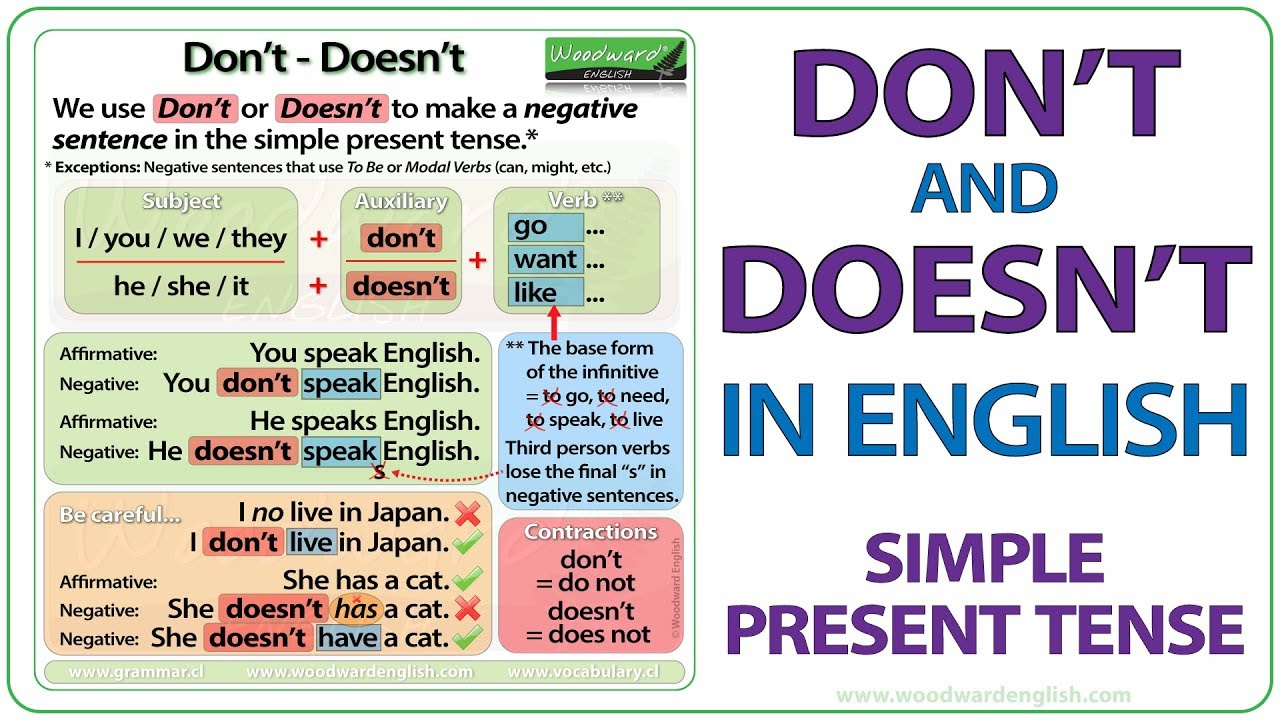
Don t Vs Doesn t In English Simple Present Tense YouTube

An English Poster With Words And Pictures On It That Say Don t Doesn t

Don t And Doesn t In English Simple Present Tense Negative

Don t And Doesn t In English Simple Present Tense Negative
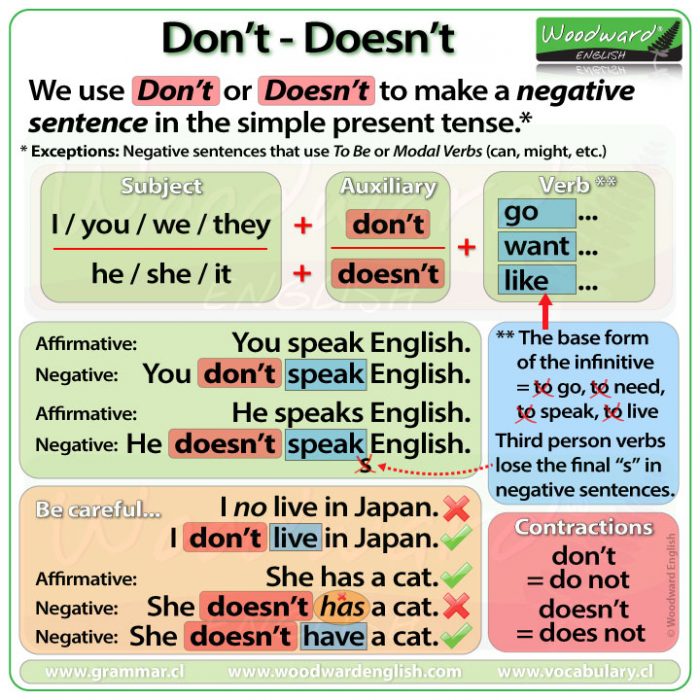
Don t And Doesn t In English Simple Present Tense Negative

Didn t is used in simple past tense for forming a negative sentence Ex I didn t have a car Don t is used in simple present tense for forming a negative sentence Ex I don t have a pen Don t is also used in imperative sentence for forbid to anyone for doing any work Ex Don t go out Don t pluck these flowers

1 It can mean the same thing as I will I will tell you tomorrow I shall tell you tomorrow 2 It can be used to talk about something that to be done or to tell people to do something Students shall write their names at the top of the page 3 It can be used in questions to talk about something that

Enter two words to compare and contrast their definitions origins and synonyms to better understand how those words are related

It really just depends on the relationship between narrative time that you re writing speaking about and utterance time when the statement is actually made That s to say if it s relevant now at time of speaking that you still don t cross paths present tense don t is appropriate But if you re reminiscing perhaps decades later about your schooldays say then it s all in the

Learn how to make negative sentences using Don t Doesn t and Didn t correctly followed by a simple exercise for you to practice Also see the previous vide
Grammar Tips Didn t vs Haven t A very common grammar mistake is using didn t instead of haven t or vice versa This can be particularly tricky when you re learning English as a second language Didn t and haven t are both examples of contractions and they both describe an action that hasn t taken place But even though they mean similar things these two words Jeanette has asked about the difference between don t and doesn t These are negative forms of one of the most important verbs in English My colleague Kory Stamper an editor of the Learner s Dictionary responds Both don t and doesn t are contractions Don t is a contraction of do not while doesn t is a contraction of does not and they both act as auxiliary verbs
Using do not explains that something should not be done This is considered the more formal option of the two It is accepted in all writing styles Usually when speaking people prefer the brevity of a contraction so they opt for the other option don t Don t is typically only used when speaking or writing informally