Difference Between And In Verilog Electronics Difference Between And In Verilog 2 Solutions Verilog VHDL 2023 Verilog C 2023 Verilog Vs SystemVerilog Top 10 Differences You Should Know What Is The Difference Between Data Flow And Behavioral Modelling In There are two main differences between functions and tasks When we write a verilog function it performs a calculation and returns a single value In contrast a verilog task executes a number of sequential statements but doesn t return a value Instead the task can have an unlimited number of outputs
The Verilog case statement is a convenient structure to code various logic like decoders encoders onehot state machines Verilog defines three versions of the case statement case casez casex Not only is it easy to confuse them but there are subtleties between them that can trip up even experienced coders Continuous Assignment Continuous assignment is used to drive a value on to a net in dataflow modeling The net can be a vector or scalar indexed part select constant bit or part select of a vector Concatenation is also supported with scalar vector types module Conti Assignment addr1 addr2 wr din valid1 valid2 dout input 31 0 addr1
What Is The Difference Between Data Flow And Behavioral Modelling In Verilog Initial Block Javatpoint What Is The Difference Between Verilog And SystemVerilog Pediaa Com Difference Between Verilog And SystemVerilog Funny Ooze Was Ist Der Unterschied Zwischen Verilog Und SystemVerilog Differbetween What Is The Difference Between Length And Size In MATLAB Quora Difference Between Program Block And Module In System Verilog The Difference Between Signed And Unsigned Numbers In Verilog In 2 To 4 Decoder In Verilog HDL GeeksforGeeks
Difference Between And In Verilog
 Difference Between And In Verilog
https://i.ytimg.com/vi/eCSVEbeoRXo/maxresdefault.jpg
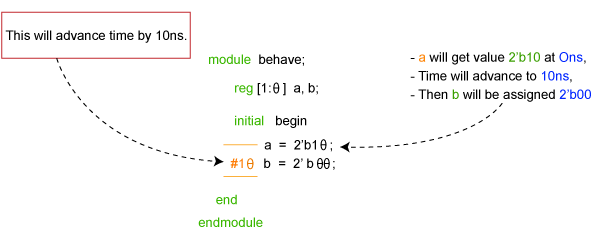
Non blocking Non blocking assignment allows assignments to be scheduled without blocking the execution of following statements and is specified by a symbol It s interesting to note that the same symbol is used as a relational operator in expressions and as an assignment operator in the context of a non blocking assignment
Templates are pre-designed files or files that can be utilized for various functions. They can conserve effort and time by offering a ready-made format and layout for developing various type of material. Templates can be utilized for individual or expert projects, such as resumes, invites, leaflets, newsletters, reports, discussions, and more.
Difference Between And In Verilog

Verilog Vs VHDL Explain By Examples FPGA4student
Verilog Initial Block Javatpoint

What Is The Difference Between Verilog And SystemVerilog Pediaa Com

Difference Between Verilog And SystemVerilog Funny Ooze
What Is The Difference Between Length And Size In MATLAB Quora
Difference Between Program Block And Module In System Verilog

Save this answer Show activity on this post is a nonblocking assignment It is used to describe sequential logic like in your code example Refer to IEEE Std 1800 2012 section 10 4 2 Nonblocking procedural assignments is for blocking assignments It is used to describe combinational logic

Verilog Equality Operators Equality operators have the same precedence amongst them and are lower in precedence than relational operators The result is 1 if true and 0 if false If either of the operands of logical equality or logical inequality is X or Z then the result will be X You may use case equality operator or case

Show activity on this post According to IEEE1800 2012 is a binary logical shift while is a binary arithmetic shift Basically arithmetic shift uses context to determine the fill bits so arithmetic right shift shift right specified number of bits fill with value of sign bit if expression is signed otherwise fill with zero
Verilog Relational Operators We use relational operators to compare the value of two different variables in verilog The result of this comparison returns either a logical 1 or 0 representing true and false respectively These operators are similar to what we would see in other programming languages such as C or Java In addition to this most of these operators are also commonly used in

This operand is useful for converting a multi bit vector into a single bit scalar value It performs bit by bit logical operation on the vector operand and returns a boolean value For example 1011 1 0 1 1 0 reduction and of 1011 Verilog has provided us with the following types of reduction operators Expression
The only real difference between wire and reg declarations in Verilog is that a reg can be assigned to in a procedural block a block beginning with always or initial and a wire can be assigned in a continuous assignment an assign statement or as an output of an instantiated submodule You simply need to declare each net as wire or reg In my knowledge the assign statement is a Procedural Continuous assignment For example the output of a transparent latch will follow the data input when the latch is enabled but when the latch is disabled it must ignoew any changes on its data input and retain its last output value until it is again enable
1 non blocking and is performed on every positive edge of clock these are evaluated in parallel so no guarantee of order An example of this would be a register 2 assign continual assignment to wire outside an always statement value of LHS is updated when RHS changes 3 blocking assignment inside always statements enforces