Di Dt Equation DI V L Dt Consider The Equation D 2 Theta dt 2 G L Sin Chegg An Inductor With An Inductance Of 5 75 H And A Resistance Of 9 00 Is Write Down A Differential Equation Of The Form Dy dt Ay Quizlet Solved Derive The Equation For Di dt And Dv dt Protection For The SCR 14 2 Mutual Inductance Inductance is the property of a device that expresses how effectively it induces an emf in another device Mutual inductance is the effect of two devices inducing emfs in each other A change in current dI1 dt in one circuit induces an emf 2 in the second 2 MdI1 dt
Di dt is the instantaneous rate of current change through the inductor ito current at time t 0 Reactance of the Inductor Inductive reactance is the opposition of inductor to alternating current AC which depends on its frequency f and is measured in Ohm just like resistance Inductive reactance is calculated using XL L 2 fL Where epsilon L dfrac dI dt IR 0 label eq1 which is a first order differential equation for I t Notice its similarity to the equation for a capacitor and resistor in series see RC Circuits Similarly the solution to Equation ref eq1 can be found by making substitutions in the equations relating the capacitor to the inductor
Solved Derive The Equation For Di dt And Dv dt Protection For The SCR Solved Consider The Differential Equation Dy dt T 2 1 If The Solution Of The Equation d 2 x dt 2 4 dx dt 3x 0 Plot The Graph Showing The Variation Of Induced Emf Versus DI dt Solved Solve The Differential Equation D 2y dt 2 16 Dy dt Chegg Solved Solve For The Phase Plane Equation A Dx dt y 1 Dy dx e x y Solve The Differential Equation Dy dt Y 1 Y 0 1 Using Laplace Solved Can The Following Be Correct D 2V c dt 2 Dv c dt Chegg YAMAHA DT 50 X R Replica Graphics Kit 2002 Model TMX Graphics
Di Dt Equation
 Di Dt Equation
https://s2.studylib.net/store/data/018539746_1-f898a5ae9cfd00b564f796fa7593a24d.png
varepsilon L frac di dt 2 where L is self inductance and di dt is the time rate of change in current flow Basic electrical equations have a mechanical analogy Electromotive force is analogous to mechanical force Current is the velocity of charge Therefore di dt is the rate of change of the velocity of charge which is acceleration
Pre-crafted templates provide a time-saving service for producing a diverse variety of documents and files. These pre-designed formats and layouts can be used for numerous personal and expert tasks, including resumes, invites, flyers, newsletters, reports, presentations, and more, simplifying the content development procedure.
Di Dt Equation

Question Video Solving A Separable First Order Differential Equation

Solved Consider The Differential Equation Dy dt T 2 1

If The Solution Of The Equation d 2 x dt 2 4 dx dt 3x 0

Plot The Graph Showing The Variation Of Induced Emf Versus DI dt
Solved Solve For The Phase Plane Equation A Dx dt y 1 Dy dx e x y
Solve The Differential Equation Dy dt Y 1 Y 0 1 Using Laplace
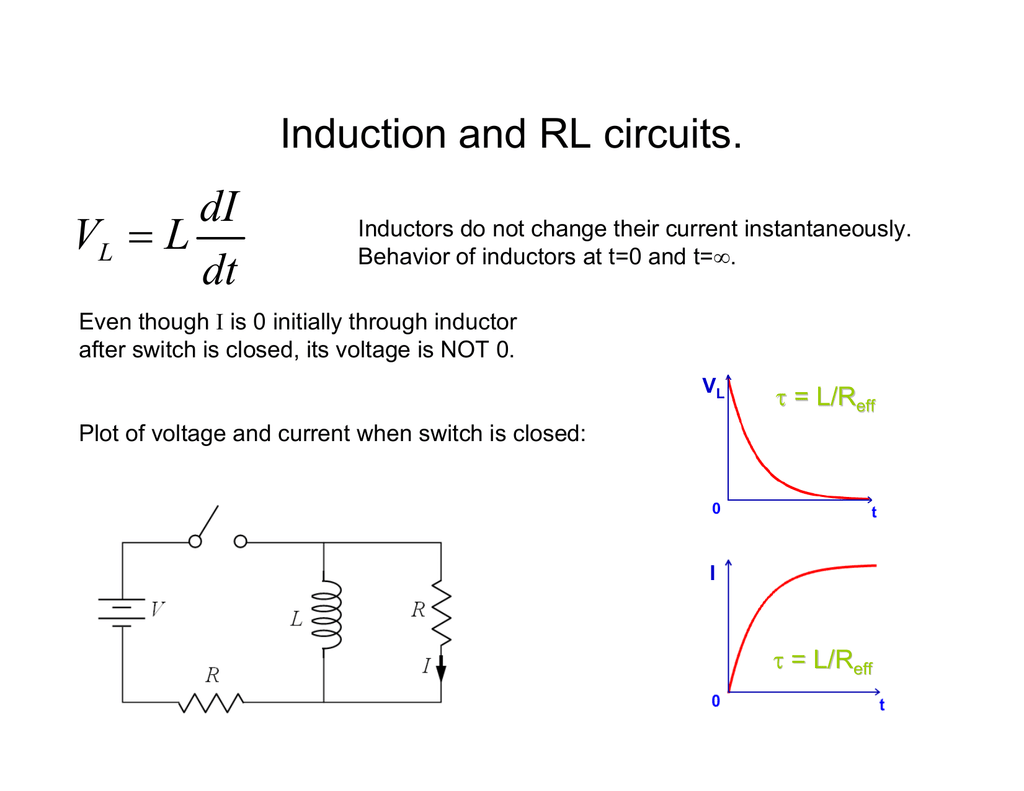
v equation v L d i d t i 1 L 0 T v d t i 0 We create simple circuits by connecting an inductor to a current source a voltage source and a switch We learn why an inductor acts like a short circuit if its current is constant
Di dt is the Currents rate of change in amps second A time varying magnetic field induces a voltage that is proportional to the rate of change of the current producing it with a positive value indicating an increase in emf and a negative value indicating a decrease in emf

So we know that the Inductor Equation is the voltage across an inductor is a factor called L the inductance times di dt So the voltage is proportional to the slope or the rate of change of current Let me do a quick review of the two letters that are used as variables for inductors

The self induced emf in a circuit is directly proportional to the time rate of change of the current dI dt multiplied by a constant L This constant is called the inductance or more precisely the self inductance and is determined by the geometry of a circuit or more commonly by the geometry of the individual circuit elements
Okay so let s put together our loop equation and solve mathcal E IR L dfrac dI dt 0 We have obtained a solution to this differential equation before with different variables Equation 3 5 8 Following the same procedure to integrate this equation gives the result
Standard AC practice uses rms currents and voltages and in the complex impedance approach the derivative of current dI dt j I The primary and secondary loop equations then take the form From the secondary circuit equation we can find an expression for the secondary current I S This can be substituted into the primary loop equation Dividing the above equation by dI dt we get L equi L 1 L 2 2M If one of the coil is reversed so as the same current flows through each coil but oin the opposite direction the mutual inductance then the existing mutual inductance will have the cancelling effect on each coil as explained below
The resulting characteristic equation is s 2 R L s 1 LC 0 We will solve for the roots of the characteristic equation using the quadratic formula s R R 2 4 L C 2 L By substituting variables and o we can write s a little simpler as s 2 o 2 where R 2 L and o 1 LC