What Is Arbitrage Pricing Model Arbitrage Pricing Theory Definition EconTips Arbitrage Pricing Theory Definition EconTips Chapter 7 Capital Asset Pricing And Arbitrage Pricing Theory Chapter 10 Arbitrage Pricing Theory And Multifactor Models Of Risk And Figure I From The Arbitrage Pricing Theory Approach To Strategic What is Arbitrage Pricing Theory APT Arbitrage pricing theory APT is a well known method of estimating the price of an asset The theory assumes an asset s return is dependent on various macroeconomic market and security specific factors
Arbitrage Pricing Theory APT is a theory of asset pricing where in it tries to exploit the deflected efficiency of the market by returning a forecast with a linear relationship between the asset s expected return and several macroeconomic variables that capture systematic risk Ross 1971 1974 1976 developed the arbitrage pricing theory APT as a new general equilibrium framework grounded in a linear relation between expected returns on assets and their risks A no arbitrage condition is assumed in which no wealth is required due to long short portfolios held by investors
Figure I From The Arbitrage Pricing Theory Approach To Strategic Arbitrage Pricing Theory APT Definition Gabler Wirtschaftslexikon Arbitrage Pricing Model Arbitrage Pricing Theory Advantages And Disadvantages Arbitrage Arbitrage Pricing Theory YouTube Solved 14 You Are Using The Arbitrage Pricing Model To Chegg Arbitrage Pricing Theory APT Formula And How It s Used Arbitrage Pricing Theory Video Investopedia PDF On The Arbitrage Pricing Theory
What Is Arbitrage Pricing Model
 What Is Arbitrage Pricing Model
https://econtips.com/wp-content/uploads/2022/09/Arbitrage-Pricing-Theory.jpg
The arbitrage pricing theory APT was developed primarily by Ross heuristic argument for the theory is based on the preclusion of arbitrage This intuition is sketched in section Ross s formal proof shows that the linear pricing relation is a necessary condition for equilibrium in a market where agents maximize certain types of
Pre-crafted templates provide a time-saving service for developing a diverse series of documents and files. These pre-designed formats and designs can be used for different individual and professional tasks, consisting of resumes, invites, flyers, newsletters, reports, presentations, and more, streamlining the material creation procedure.
What Is Arbitrage Pricing Model
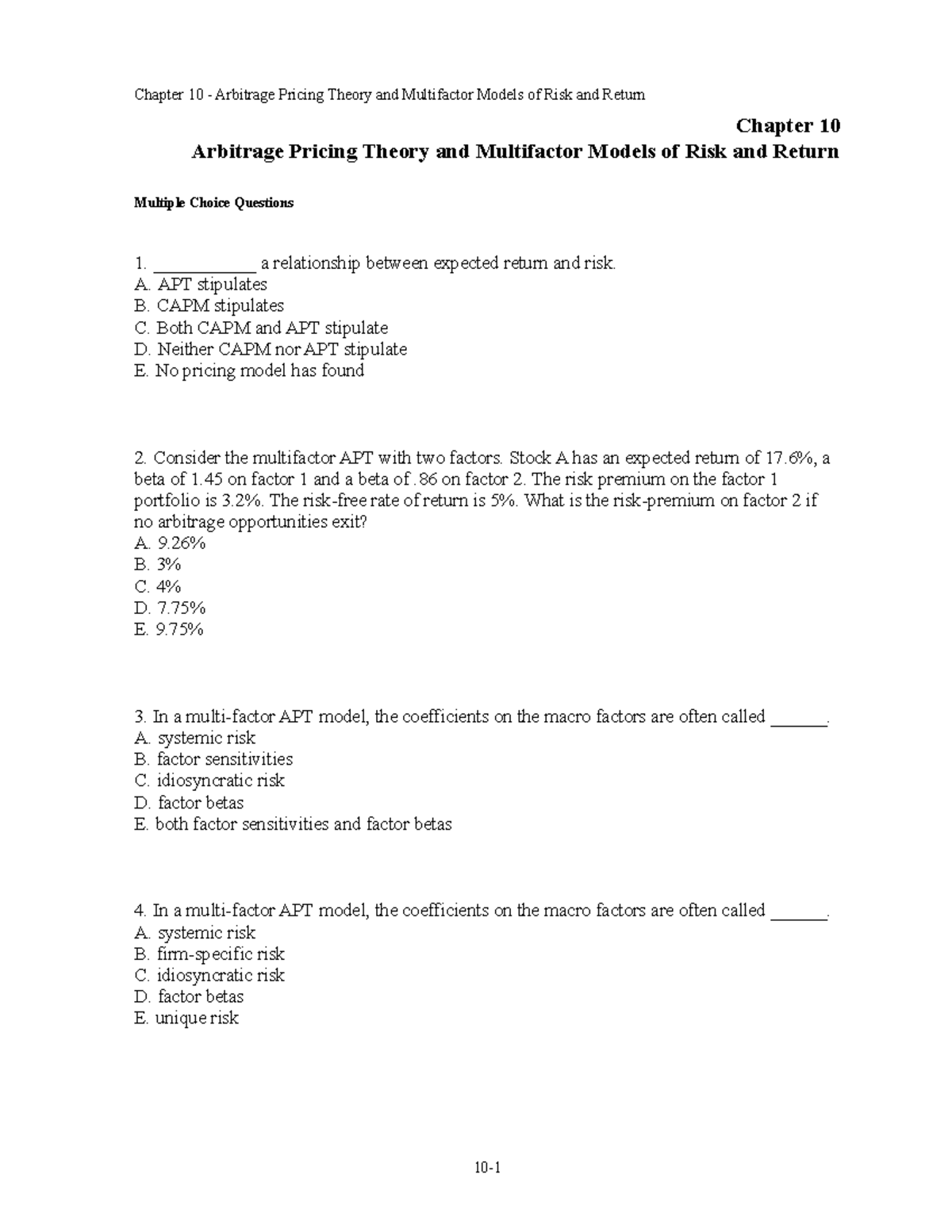
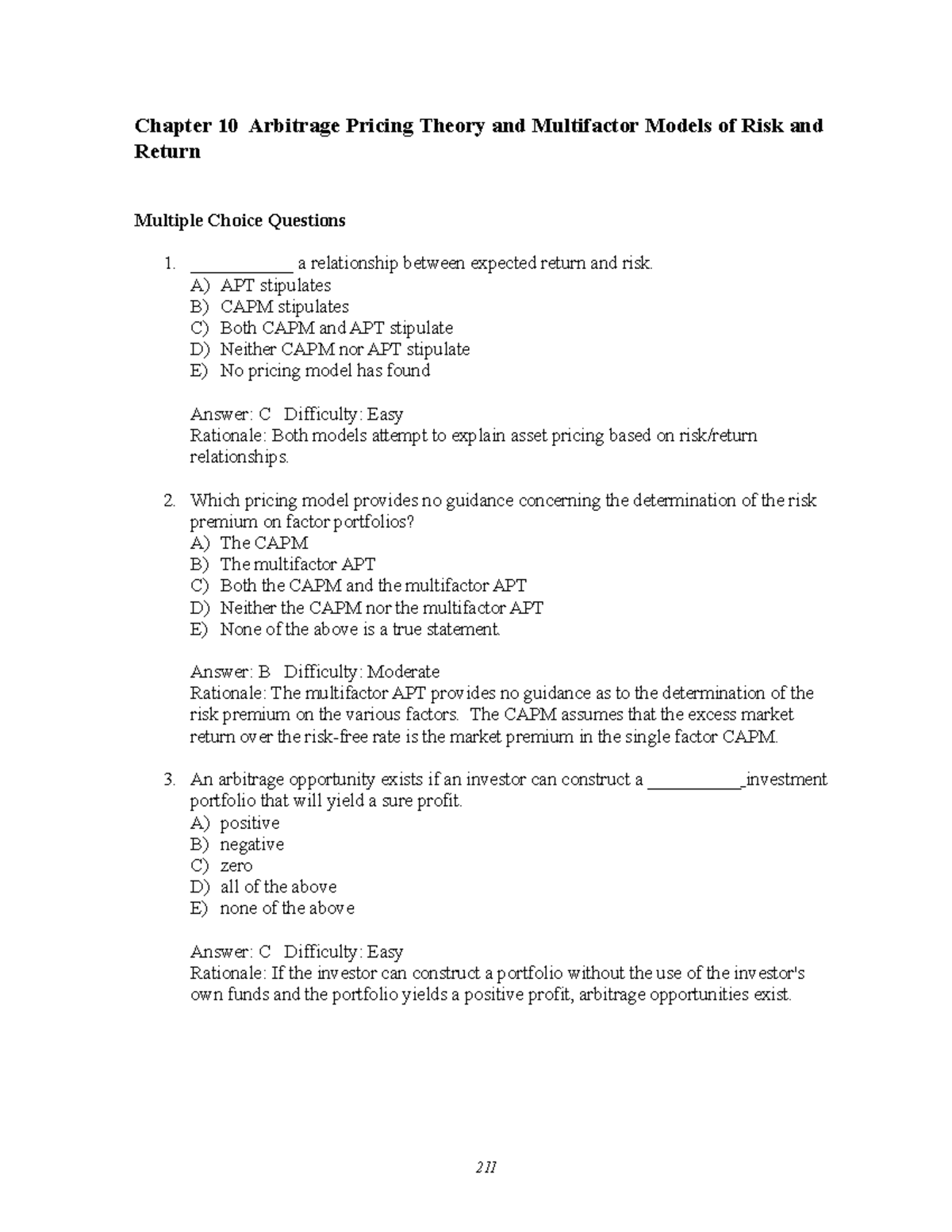
APT Qs Questions With Solutions Chapter 10 Arbitrage Pricing Theory

Arbitrage Pricing Theory APT Definition Gabler Wirtschaftslexikon
Arbitrage Pricing Model
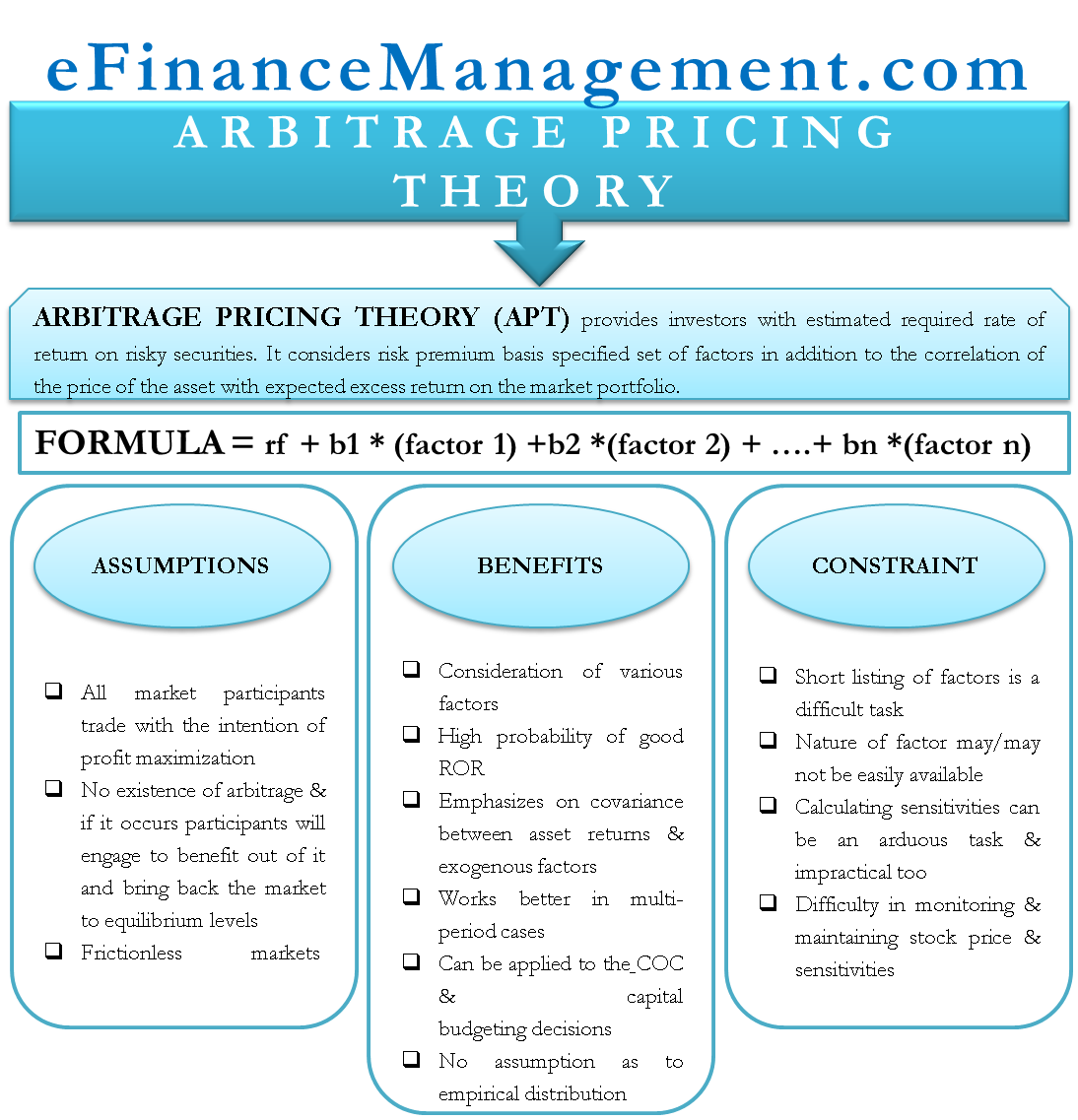
Arbitrage Pricing Theory Advantages And Disadvantages Arbitrage
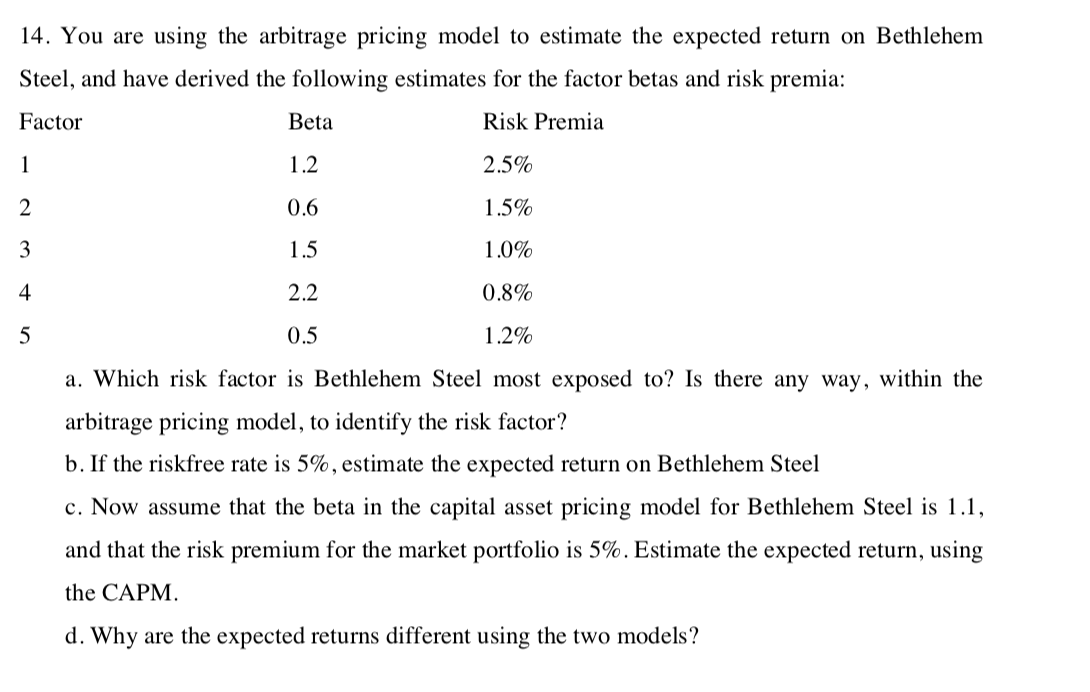
Solved 14 You Are Using The Arbitrage Pricing Model To Chegg

Arbitrage Pricing Theory APT Formula And How It s Used

The Arbitrage Pricing Theory APT is a theory of asset pricing that holds that an asset s returns can be forecasted with the linear relationship of an asset s expected returns and the macroeconomic factors that affect the asset s risk The theory was created in 1976 by American economist Stephen Ross

The arbitrage pricing theory APT is an economic model for estimating an asset s price using the linear function between expected return and other macroeconomic factors associated with its risks It offers a more effecient alternative to the traditional Capital Asset Pricing Model CAPM

Arbitrage pricing theory APT is an alternative to the capital asset pricing model CAPM for explaining returns of assets or portfolios It was developed by economist Stephen Ross in the
In finance arbitrage pricing theory APT is a multi factor model for asset pricing which relates various macro economic systematic risk variables to the pricing of financial assets
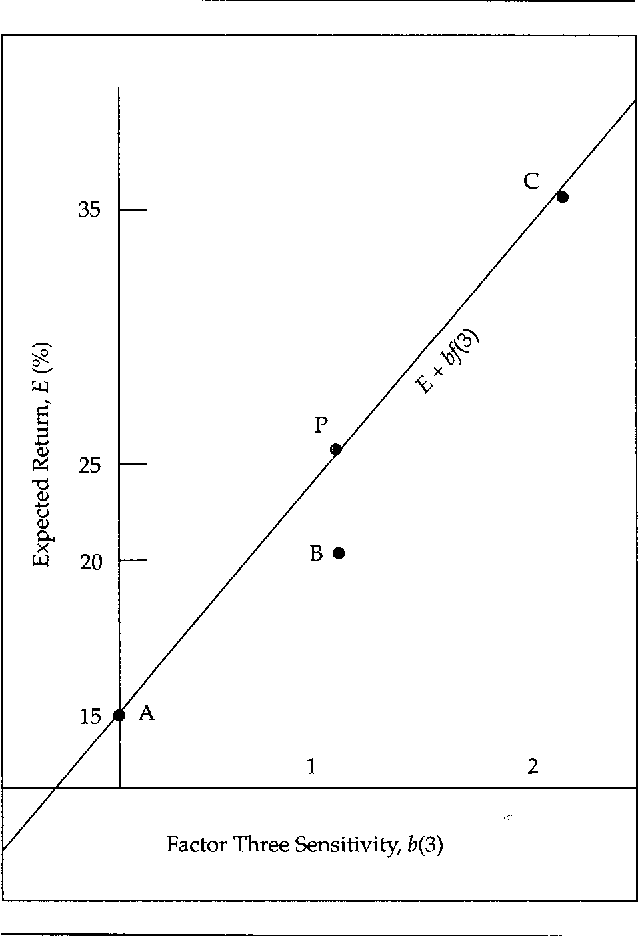
The Arbitrage Pricing Theory APT was developed primarily by Ross 1976a 1976b It is a one period model in which every investor believes that the stochastic properties of returns of capital assets are consistent with a factor structure
[desc-11] [desc-12]
[desc-13]