Square Root Transformation In Statistics Log Vs Square root Transformation Chapter 15 Strategies When Population Distributions Are Not Normal Chapter 15 Strategies When Population Distributions Are Not Normal Chapter 15 Strategies When Population Distributions Are Not Normal Chapter 15 Strategies When Population Distributions Are Not Normal Square root transformation This consists of taking the square root of each observation The back transformation is to square the number If you have negative numbers you can t take the square root you should add a constant to each number to make them all positive
Square root transformation This consists of taking the square root of each observation The back transformation is to square the number If you have negative numbers you can t take the square root you should add a constant to each number to make them all positive 101 4 6K views 1 year ago CINCINNATI In this Statistics 101 video we learn about reflecting and then applying the square root transformation to variables so that the variables better meet
Chapter 15 Strategies When Population Distributions Are Not Normal Statistical Transformations Are Like A Data Scientist s Swiss Army How To Transform Data In Excel Log Square Root Cube Root How To Transform Data In Excel Log Square Root Cube Root Square Root Transformation A Beginner s Guide QUANTIFYING HEALTH Square Root Transformation A Beginner s Guide QUANTIFYING HEALTH Square Root Transformation In SPSS YouTube How To Transform Data In R Log Square Root Cube Root Design And Analysis Of Experiments Ppt Download
Square Root Transformation In Statistics
 Square Root Transformation In Statistics
https://image.ibb.co/mixcAL/Screen-Shot-2018-11-15-at-16-47-43.png
Variable transformation usually changes the original characteristics and nature of units of variables Back transformation is crucial for the interpretation of the estimated results This article introduces general concepts about variable transformation mainly focused on logarithmic transformation
Pre-crafted templates provide a time-saving solution for producing a diverse variety of files and files. These pre-designed formats and layouts can be made use of for different personal and expert projects, including resumes, invites, leaflets, newsletters, reports, presentations, and more, streamlining the material creation procedure.
Square Root Transformation In Statistics

Understanding Autocorrelation Fera Analytics
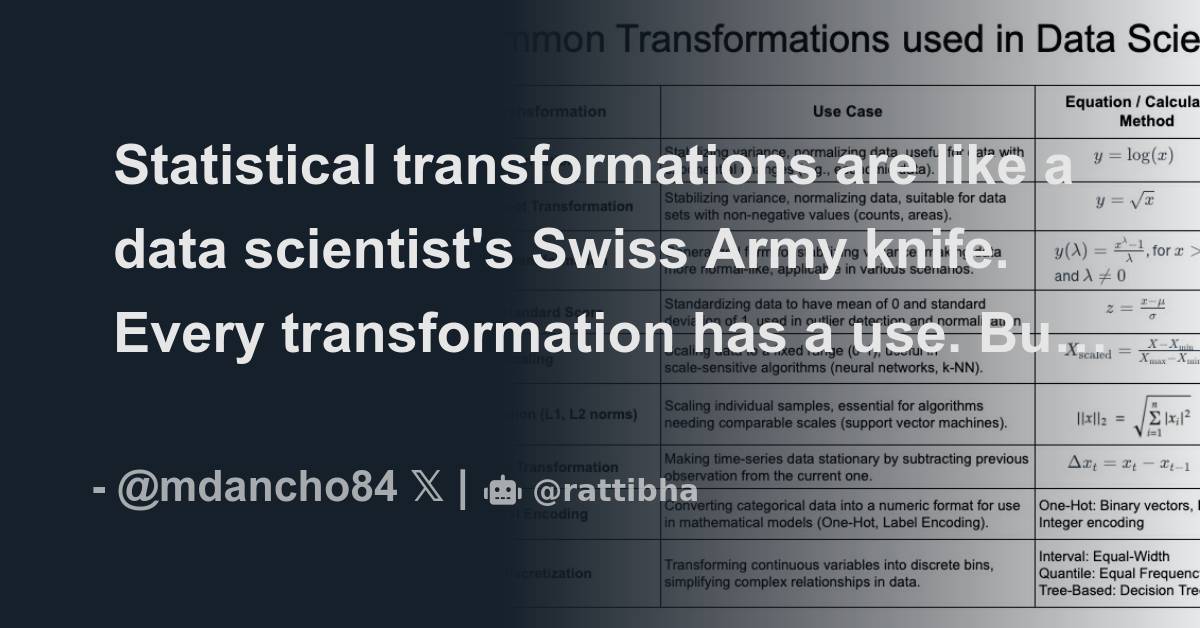
Statistical Transformations Are Like A Data Scientist s Swiss Army

How To Transform Data In Excel Log Square Root Cube Root

How To Transform Data In Excel Log Square Root Cube Root
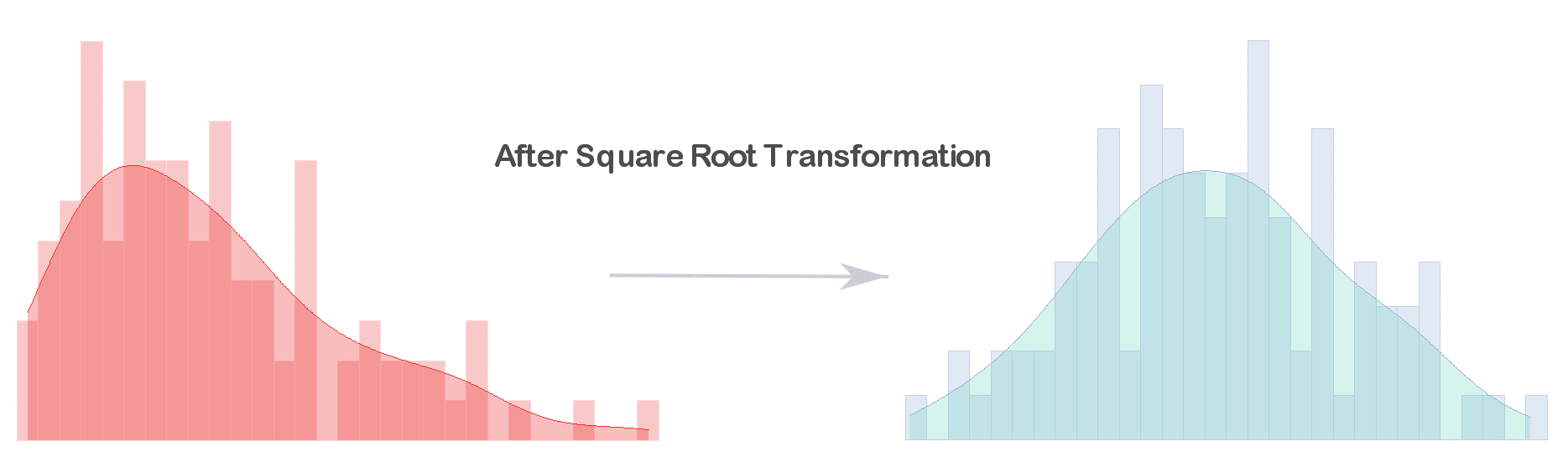
Square Root Transformation A Beginner s Guide QUANTIFYING HEALTH
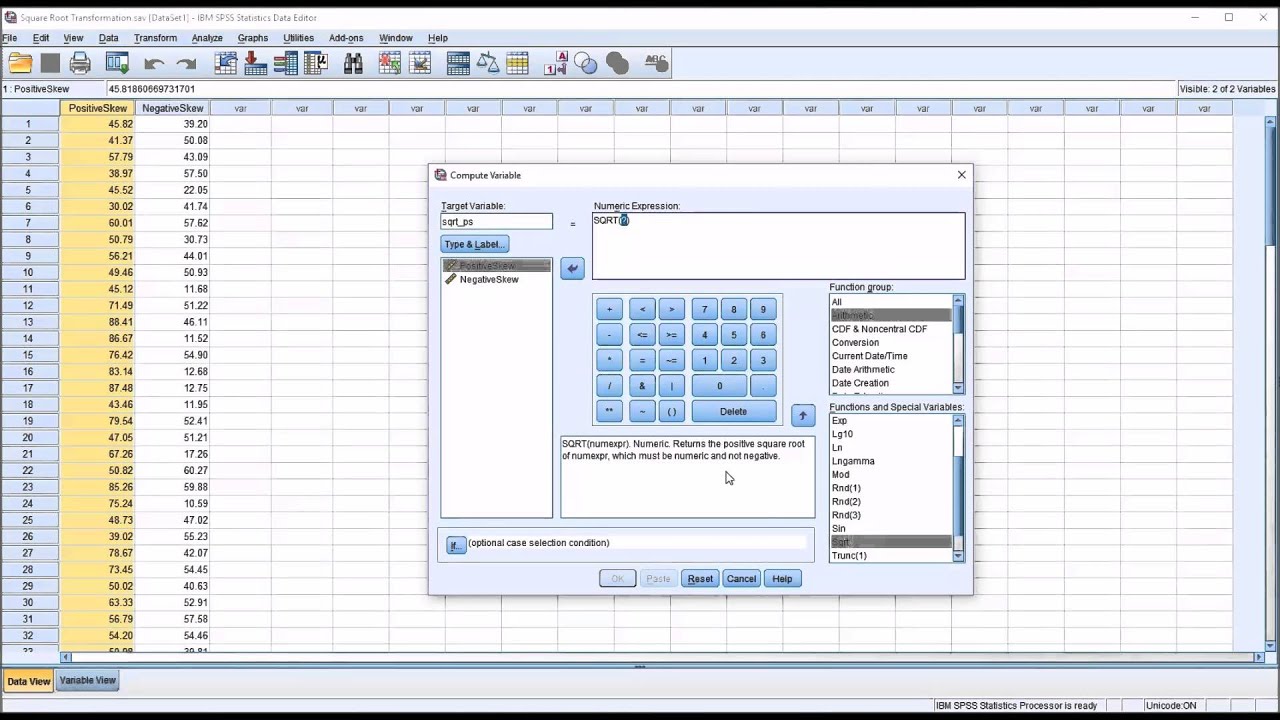
Square Root Transformation In SPSS YouTube

2 Square Root Transformation This transformation will give a moderate effect on distribution The main advantage of square root transformation is it can be applied to zero values Here the x will replace by the square root x It is weaker than the Log Transformation sqrt target df Target 1 2

Square root transformation is one of the many types of standard transformations This transformation is used for count data data that follow a Poisson distribution or small whole numbers This transformation also may be appropriate for percentage data where the range is between 0 and 20 or between 80 and 100 Each data point is replaced

The logarithm transformation and square root transformation are commonly used for positive data and the multiplicative inverse transformation reciprocal transformation can be used for non zero data

1 Log Transformation Transform the response variable from y to log y 2 Square Root Transformation Transform the response variable from y to y 3 Cube Root Transformation Transform the response variable from y to y1 3

The square root transformation is just a special case of Box Cox power transformation a nice overview by Pengfi Li could be useful reading and is found here with lambda 0 5 and omitting some centering The aim of the Box Cox transformations is to ensure the usual assumptions for Linear Model hold That is y sim N X beta sigma 2 I n
1 Answer Sorted by 56 The square root is approximately variance stabilizing for the Poisson There are a number of variations on the square root that improve the properties such as adding 3 8 3 8 before taking the square root or the Freeman Tukey X X 1 X X 1 though it s often adjusted for the mean as well There are three commonly used transformations for quantitative data the logarithm the square root and the reciprocal The reciprocalof a number is one divided by that number hence the reciprocal of 2 is There are good mathematical reasons for these choices Bland 2000 discusses them
A common now archaic recommendation is to transform the response using the square root transformation y sqrt y and stay within the linear regression framework Perhaps now the advice should be to use Poisson regression which we ll cover in the optional content