Setting Environment Variables Azure Devops Using Environment Variables In Azure DevOps Pipelines LaptrinhX Docker How To Set Environment Variables In Dockerfile Via Azure Azure Container Instances Microsoft Learn How To Set Environment Variables For Use With An Azure Function Print All Environment Variables In Azure DevOps For Windows Agents With Value of the variable For secret variables if value parameter isn t provided it s picked from environment variable prefixed with AZURE DEVOPS EXT PIPELINE VAR or user is prompted to enter it via standard input For example a variable named MySecret can be input using the environment variable AZURE DEVOPS EXT PIPELINE VAR MySecret n n
Create an environment Sign in to your organization https dev azure yourorganization and select your project Select Pipelines Environments Create environment Enter information for the environment and then select Create Resources can be added to an existing environment later Use a Pipeline to create and deploy to environments too 1 Answer Sorted by 2 According to your description and to transfer the parameter as the environmental varailbles on the level of a task you may try Passing parameters into the template and using the parameter type of object Kindly take the following main YAML pipeline and template yml for a reference Main
Print All Environment Variables In Azure DevOps For Windows Agents With Azure Pipelines Azure Pipelines Microsoft Learn Print All Environment Variables In Azure DevOps For Linux Agents With Azure DevOps Tips And Tricks 10 Manage Environment Specific Azure Pipeline Variables Colin s ALM Corner Azure DevOps Creating Environment Variables For Actions In Inline Bash Umbraco 9 And Configuration MICHAEL S UGARAGE Vista Setting Environment Variables Free Download Programs Conditional Variables In Azure DevOps Pipelines Thomas Thornton
Setting Environment Variables Azure Devops
 Setting Environment Variables Azure Devops
https://odetocode.com/images3/envvars/pipelinevar.png
Add a PowerShell script YAML Classic The syntax for including PowerShell Core is slightly different from the syntax for Windows PowerShell Push your PowerShell script to your repo Add a pwsh or powershell step The pwsh keyword is a shortcut for the PowerShell task for PowerShell Core
Pre-crafted templates use a time-saving solution for producing a varied variety of files and files. These pre-designed formats and designs can be used for different individual and professional tasks, consisting of resumes, invitations, flyers, newsletters, reports, discussions, and more, streamlining the content development procedure.
Setting Environment Variables Azure Devops
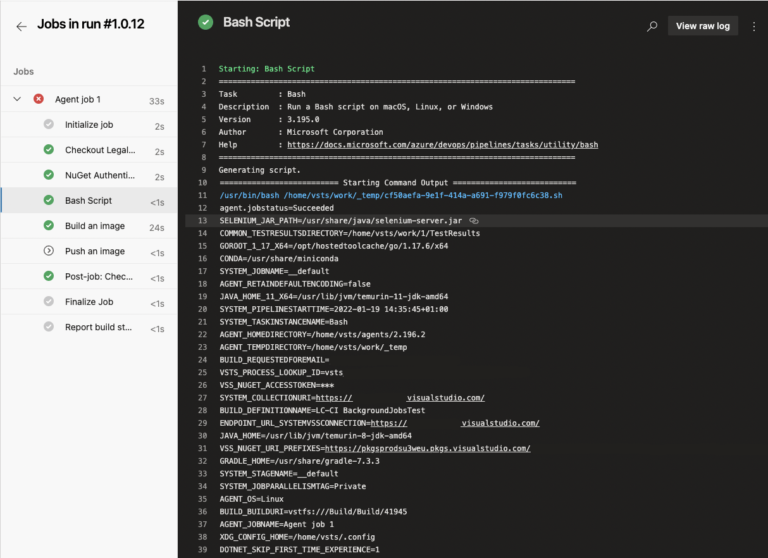
Print All Environment Variables In Azure DevOps For Linux Agents With
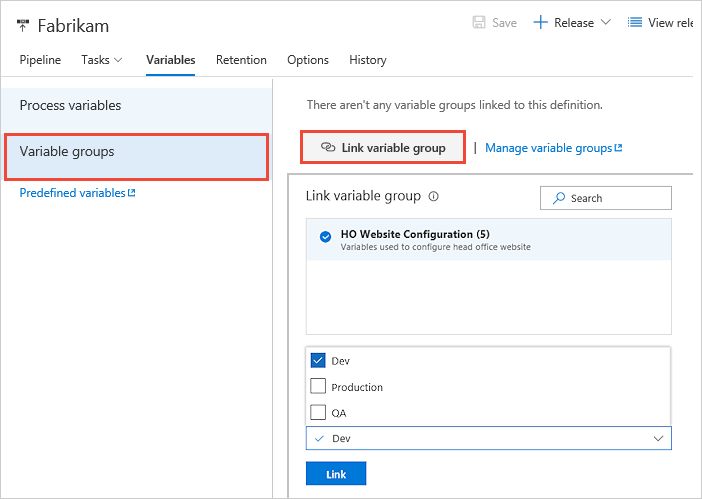
Azure Pipelines Azure Pipelines Microsoft Learn

Print All Environment Variables In Azure DevOps For Linux Agents With

Azure DevOps Tips And Tricks 10 Manage Environment Specific

Azure DevOps Creating Environment Variables For Actions In Inline Bash

Umbraco 9 And Configuration MICHAEL S UGARAGE
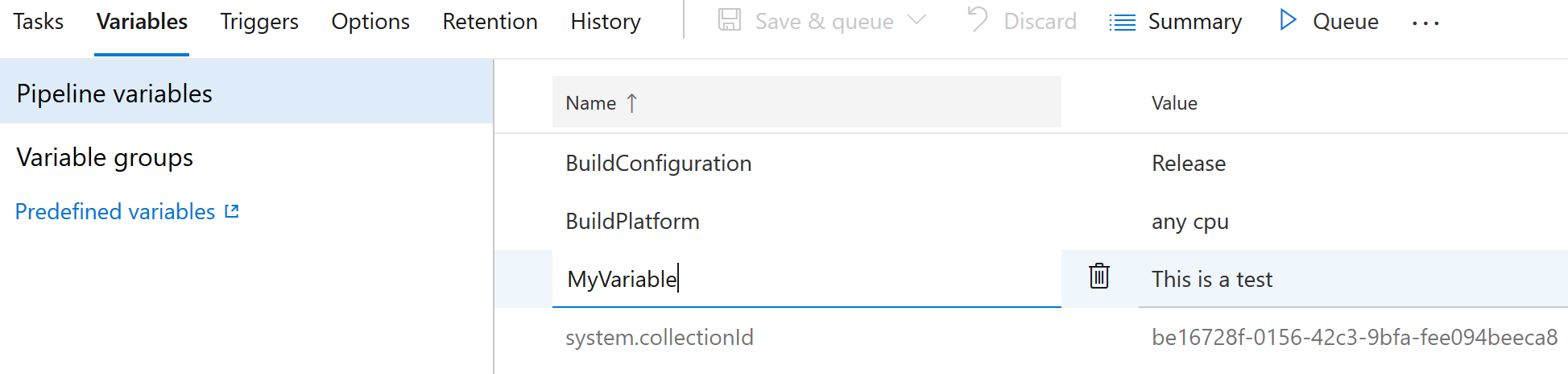
58 I have some test automation code that reads some values from an environment variable stored on my local machine like this Environment GetEnvironmentVariable SAUCE USERNAME EnvironmentVariableTarget User I m trying to use Azure Pipelines to create this variable during pipeline execution and then read it in my test automation code

Environments provide the ability to monitor deployments that are occurring provide an additional level of security and assist in tracking the state of work items in terms of where they have been deployed to Environments like a lot of things withing Azure is a very generic term These environments are accessed under the pipelines blade

There are 3 ways to get an environment variable value on your build server Set the value on the build machine Set the value in the YAML build script Set the value in Azure DevOps for the build pipeline definition Option 1 Set the value on the build machine The first way is easy enough if you own the machine that hosts the build and release agent

Steps bash echo This script could use SYSTEM ACCESSTOKEN env SYSTEM ACCESSTOKEN System AccessToken powershell Write Host This is a script that could use env SYSTEM ACCESSTOKEN Write Host env SYSTEM ACCESSTOKEN System AccessToken env SYSTEM ACCESSTOKEN System AccessToken

Set a variable as secret Levels of output variables Show 4 more Azure DevOps Services Azure DevOps Server 2022 Azure DevOps Server 2019 TFS 2018 When you use PowerShell and Bash scripts in your pipelines it s often useful to be able to set variables that you can then use in future tasks Newly set variables aren t available in the same task
Go to your release Edit page Variables tab Add new Variable Set the stage Scope There is another way to set the environment variables dynamically using logging commands Write Host vso task setvariable in the pipeline 1 Answer Sorted by 6 At the pipeline Variables you have to set your variables Variables tab will look like Once the variables are set you can use them at your release pipeline under Deploy Azure App Service task in format key value As per documentation Edit web app Application settings using the syntax key value
System variables can be also referred to as predefined variables these are the system variables defined by Azure DevOps In the context of build or release runtime the variables are available as Environment Variables You can find the list of system variables that are available for builds here and for releases here