Did Difference In Difference Illustration Of Difference in Difference Method Download Scientific Difference in Differences Data Analytics And Program Evaluation Difference in Difference Estimation Columbia Public Health Introduction To Difference in Differences Estimation Aptech Causal Inference A Simple Difference in Difference Model YouTube Difference in differences DID offers a nonexperimental technique to estimate the average treatment effect on the treated ATET by comparing the difference across time in the differences between outcome means in the control and treatment groups hence the name difference in differences
The coefficient for did is the difference in differences estimator The effect is significant at 10 level with the treatment having a negative effect Using the hashtag method No need to generate interaction while using the hashtag method Estimate using the following command 1 Introduction 2 The Difference in Differences method 3 Parallel trends and other assumptions 4 Further details and considerations for the use of Difference in Differences 5 Examples of Difference in Differences studies in the broader management literature 6 Discussion and conclusion Abstract Purpose
Causal Inference A Simple Difference in Difference Model YouTube Introduction To The Difference In Differences Regression Model Time Causality Staggered Difference in Difference Multiple Treatments Difference YouTube Spot The Difference swannyboy Memes Difference In Differences DID bilibili Does Vs Did Difference And Comparison Sherlu On Twitter Learn The Difference Book Free Consultation Make That Difference
Did Difference In Difference
 Did Difference In Difference
https://www.researchgate.net/profile/Mohamad_Fahmi2/publication/254455515/figure/download/fig1/AS:392804212723712@1470663230959/Illustration-of-Difference-in-Difference-Method.png?_sg=cs7guAJaZFiuX3_9XqSUJ6DMDivcV4qSl6rLuqAS5brudEt9RtSAqgpPEmxvn-f9Ni1-dDqMxTI
The difference in difference DID design is a quasi experimental research design that researchers often use to study causal relationships in public health settings where randomized controlled trials RCTs are infeasible or unethical However causal inference poses many challenges in DID designs
Pre-crafted templates offer a time-saving solution for producing a varied range of documents and files. These pre-designed formats and layouts can be made use of for numerous individual and professional projects, consisting of resumes, invites, leaflets, newsletters, reports, discussions, and more, improving the material creation procedure.
Did Difference In Difference
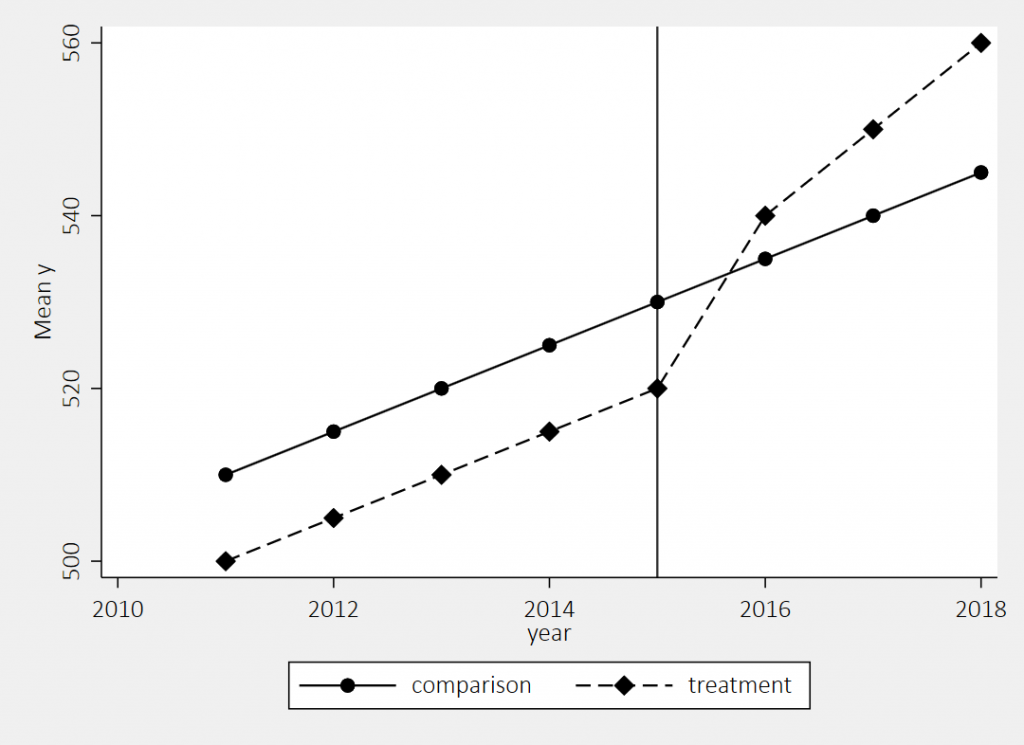
Using Difference in differences In Higher Education Research Nick Hillman

Introduction To The Difference In Differences Regression Model Time

Causality Staggered Difference in Difference Multiple Treatments

Difference YouTube

Difference In Differences DID bilibili

Does Vs Did Difference And Comparison

Overview The difference in difference DID technique originated in the field of econometrics but the logic underlying the technique has been used as early as the 1850 s by John Snow and is called the controlled before and after study in some social sciences Description

The coefficient for did is the differences in differences estimator The effect is significant at 10 with the treatment having a negative effect Estimating the DID estimator method 2 using the multiplication didreg1 lm y treated time data mydata summary didreg1

Difference in Differences DID analysis is a statistic technique that analyzes data from a nonequivalence control group design and makes a casual inference about an independent variable e g an event treatment or policy on an outcome variable

Differences in Differences regression DID is used to asses the causal effect of an event by comparing the set of units where the event happened treatment group in relation to units where the event did not happen control group

Differences in differences strategies are simple panel data methods applied to sets of group means in cases when certain groups are exposed to the causing variable of interest and others are not
Differences in differences DiD is one of the most popular methods in the social sciences for estimating causal effects in non experimental settings The last few years have seen a dizzying array of new methodological papers on DiD and related designs making it challenging for practitioners to keep up with rapidly evolving best practices 6didregress Difference in differences estimation Introduction DID is one of the most venerable causal inference methods used by researchers DID estimates the average treatment effect on the treated group ATET To obtain the ATET using DID one must compute the difference of the mean outcome for the treatment and the control groups before and after the treatment
DID intro Introduction to difference in differences estimation 3 6 5 7 7 5 8 Outcome of interest 200620082010201220142016 Year Treatment Control Figure 2 For both the treatment and the control group we see that there was a decrease in the mean of the outcome after 2010 Therefore the decrease we saw in the treatment group cannot be