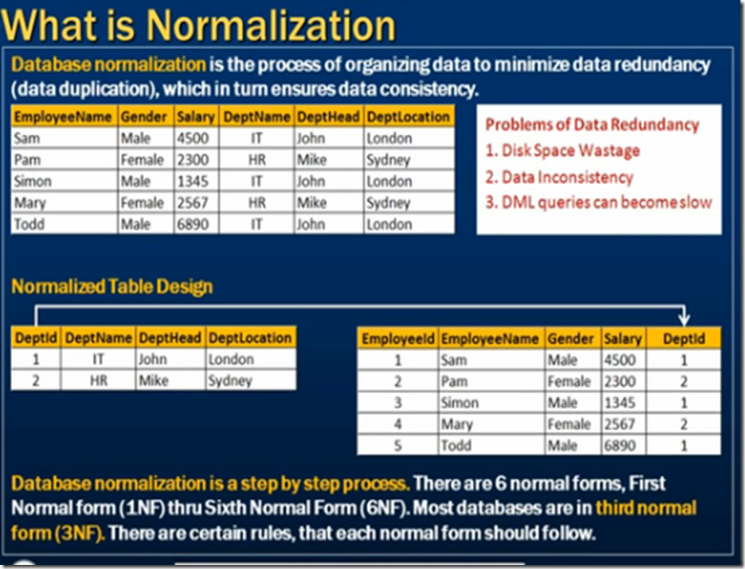
Database Design Rules Normalization Wyyme Software Database Normalization What Is Database Normalization 1NF 2NF 3NF BCNF Database Examples The Basics Of Database Normalization Normalization In DBMS 1NF 2NF 3NF And BCNF With Examples Relational Data Modeling Database Normalization Normalization is a database design technique that reduces data redundancy and eliminates undesirable characteristics like Insertion Update and Deletion Anomalies Normalization rules divides larger tables into smaller tables and links them using relationships
Database normalization or database normalisation see spelling differences is the process of structuring a relational database in accordance with a series of so called normal forms in order to reduce data redundancy and improve data integrity It was first proposed by British computer scientist Edgar F Codd as part of his relational model Database normalization is a technique that helps design the schema of the database in an optimal way The core idea of database normalization is to divide the tables into smaller subtables and store pointers to data rather than replicating it Why Do We Carry out Database Normalization
Relational Data Modeling Database Normalization Datonomy Learn More Goldman Sachs Msci And Coin Metrics Collaborate To Third Normal Form In DBMS 3rd Normal Form In Dbms 3NF In DBMS Third Database Normalization In DBMS Boyce Codd Normal Form BCNF And Database Design Normalization Example Wander In Dev Database Normalization Introduction To Database Normalization The First Three Normal Forms Sivakumar Vellingiri s Blog SQL Server Rules Of Database Database Normalization Still Relevant In A NoSQL World ITPro Today
Database Design Rules Normalization
 Database Design Rules Normalization
https://lh3.ggpht.com/-lLQpHyENPlM/UwrHy-ipylI/AAAAAAAAkV0/bE4ySv0J_0I/image_thumb%25255B1%25255D.png?imgmax=800
Normalization should be part of the database design process However it is difficult to separate the normalization process from the ER modelling process so the two techniques should be used concurrently Use an entity relation diagram ERD to provide the big picture or macro view of an organization s data requirements and operations
Templates are pre-designed documents or files that can be used for various functions. They can save time and effort by supplying a ready-made format and design for producing different sort of content. Templates can be utilized for individual or expert projects, such as resumes, invites, leaflets, newsletters, reports, presentations, and more.
Database Design Rules Normalization

Normalization In Database Gambaran
Datonomy Learn More Goldman Sachs Msci And Coin Metrics Collaborate To
Third Normal Form In DBMS 3rd Normal Form In Dbms 3NF In DBMS Third

Database Normalization In DBMS Boyce Codd Normal Form BCNF And
Database Normalization

Introduction To Database Normalization The First Three Normal Forms

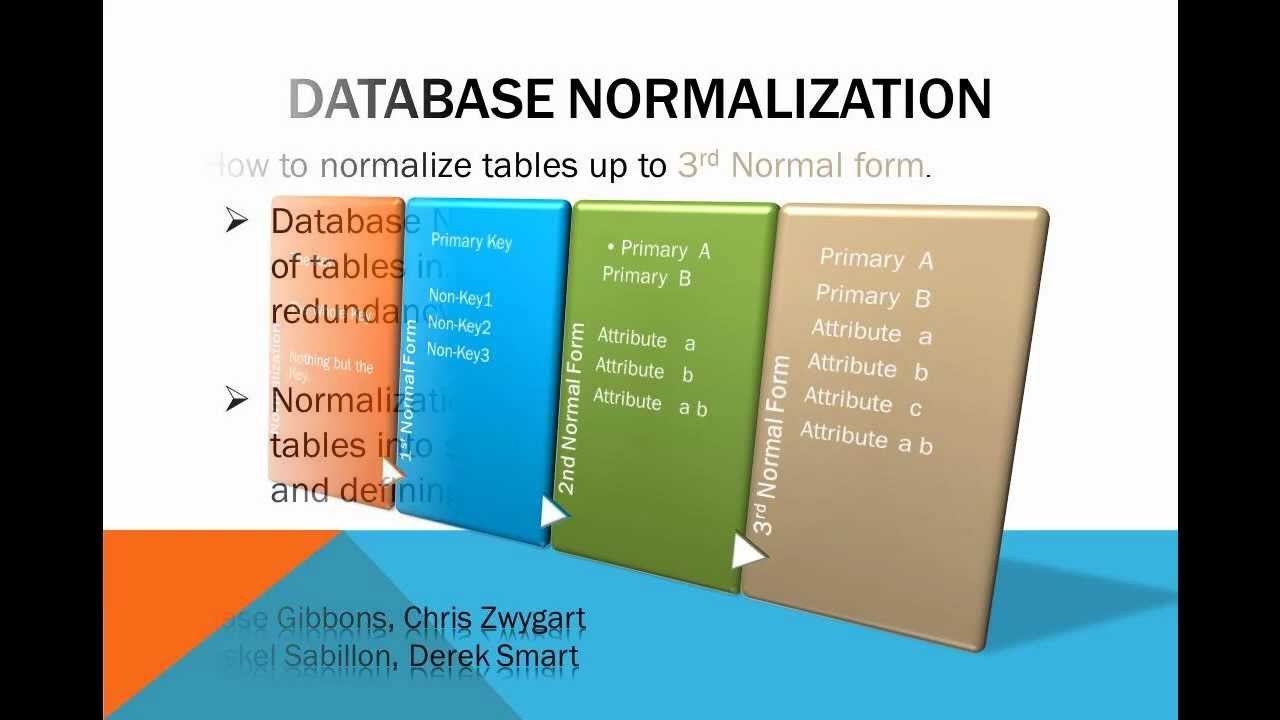
Introduction Database normalization is a method in relational database design which helps properly organize data tables The process aims to create a system that faithfully represents information and relationships without data loss or redundancy
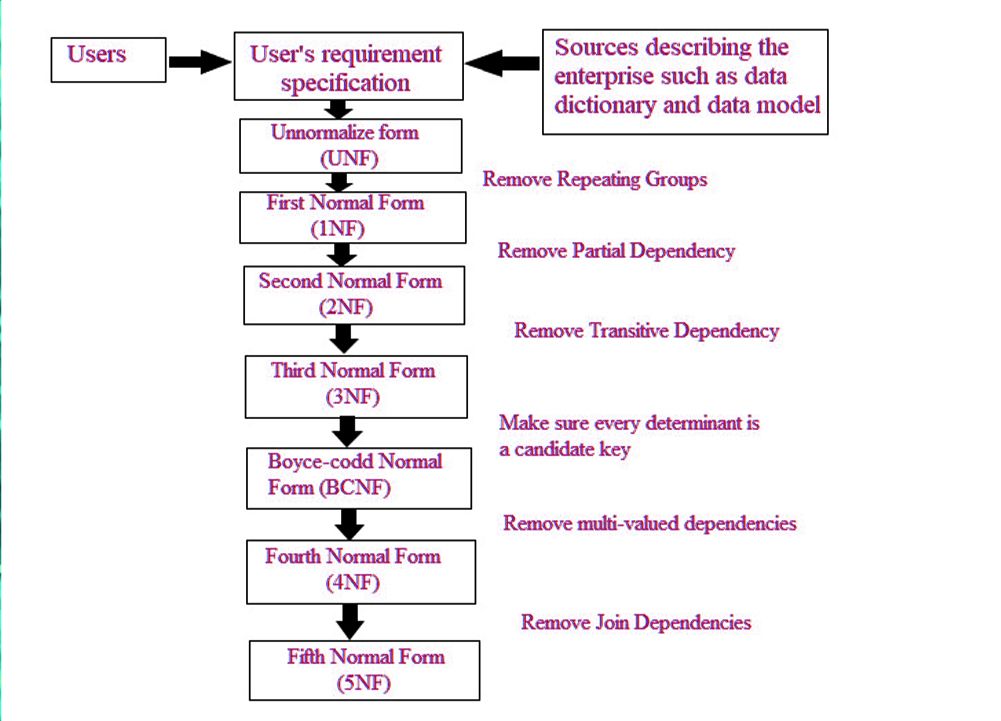
Normalization is the process of organizing data in a database It includes creating tables and establishing relationships between those tables according to rules designed both to protect the data and to make the database more flexible by eliminating redundancy and inconsistent dependency

It is a process that optimizes database structure by reducing data redundancy and improving data integrity Normalization is a set of rules and guidelines that help organize data efficiently and prevent common data anomalies like update anomalies insertion anomalies and deletion anomalies
Database normalization is a database design principle for organizing data in an organized and consistent way It helps you avoid redundancy and maintain the integrity of the database It also helps you eliminate undesirable characteristics associated with insertion deletion and updating What is the Purpose of Normalization

Refining the design Applying the normalization rules Some database terms to know Access organizes your information into tables lists of rows and columns reminiscent of an accountant s pad or a spreadsheet In a simple database you might have only one table For most databases you will need more than one
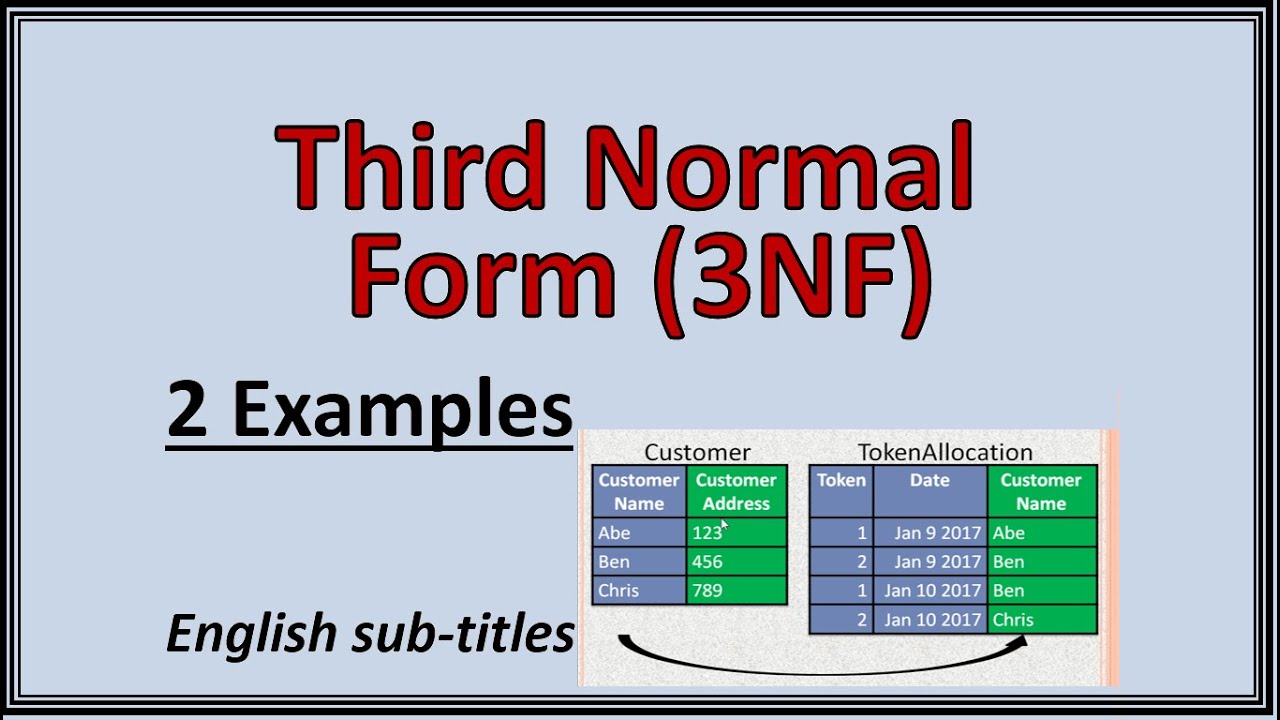
Normalization is the process of efficiently organizing data in a database There are two goals of the normalization process eliminating redundant data for example storing the same data in more than one table and ensuring data dependencies make sense only storing related data in a table During the normalization process of database design make sure that proposed entities meet required normal form before table structures are created semantic rules business rules applied to the database third normal form 3NF the relation must be in 2NF and all transitive dependencies must be removed a non key attribute may not be
Normalization is the process of organizing a database to reduce redundancy and improve data integrity Normalization also simplifies the database design so that it achieves the optimal structure composed of atomic elements i e elements that cannot be broken down into smaller parts Also referred to as database normalization or data