Can Sentences Examples Permission Modals For Asking Permissions Modal Verbs 7ESL Pin On Modals In English Modal Verbs Can Example Sentences English Grammar Here Modals Of PERMISSION English Study Here 10 Examples Of Modals Definition And Example Sentences Here Are Grammar test 1 Read the explanation to learn more Grammar explanation We often use verbs with modal meanings to talk about permission and obligation Permission can We often use can to ask for and give permission Can I sit here You can use my car if you like Can I make a suggestion could
can and could Level beginner Possibility and impossibility We use could to show that something is possible but not certain They could come by car Maybe they will come by car They could be at home Maybe they are at home We use can to make general statements about what is possible Could Could has at least three functions First it can replace can and give the phrase a more conditional tone Second it can function as a the past tense of can Third it can function in the same way as might or may suggesting that something is a possibility The negative of can is could not
10 Examples Of Modals Definition And Example Sentences Here Are Phrases Asking For Permission Learn English English Phrases Modal Verbs Permission May Learn English English Vocabulary Modal Verbs Of Permission Requests And Offers GrammarTOP Click On MODAL VERBS EXPRESSING PERMISSION Different Ways Of Asking For Permission And Responding English Study Modal Verbs CAN Using And Example Sentences English Study Here Modal Verbs Of Permission Lessons For English English Perfect Modal Verbs Example Sentences Effortless English
Can Sentences Examples Permission
 Can Sentences Examples Permission
https://7esl.com/wp-content/uploads/2018/05/modal-permission.jpg
Grammar When we want to express permission prohibition not allowing something obligation or no obligation we use modal verbs Permission can may could Can is most often used to ask for or give permission but may and could are also possible even though they are not used as often as can Can I borrow a pen
Templates are pre-designed files or files that can be utilized for different functions. They can save time and effort by supplying a ready-made format and layout for creating various type of material. Templates can be utilized for personal or expert projects, such as resumes, invitations, leaflets, newsletters, reports, presentations, and more.
Can Sentences Examples Permission

Ability Possibility Permission The Modal Verb CAN English Galore

Phrases Asking For Permission Learn English English Phrases

Modal Verbs Permission May Learn English English Vocabulary

Modal Verbs Of Permission Requests And Offers GrammarTOP
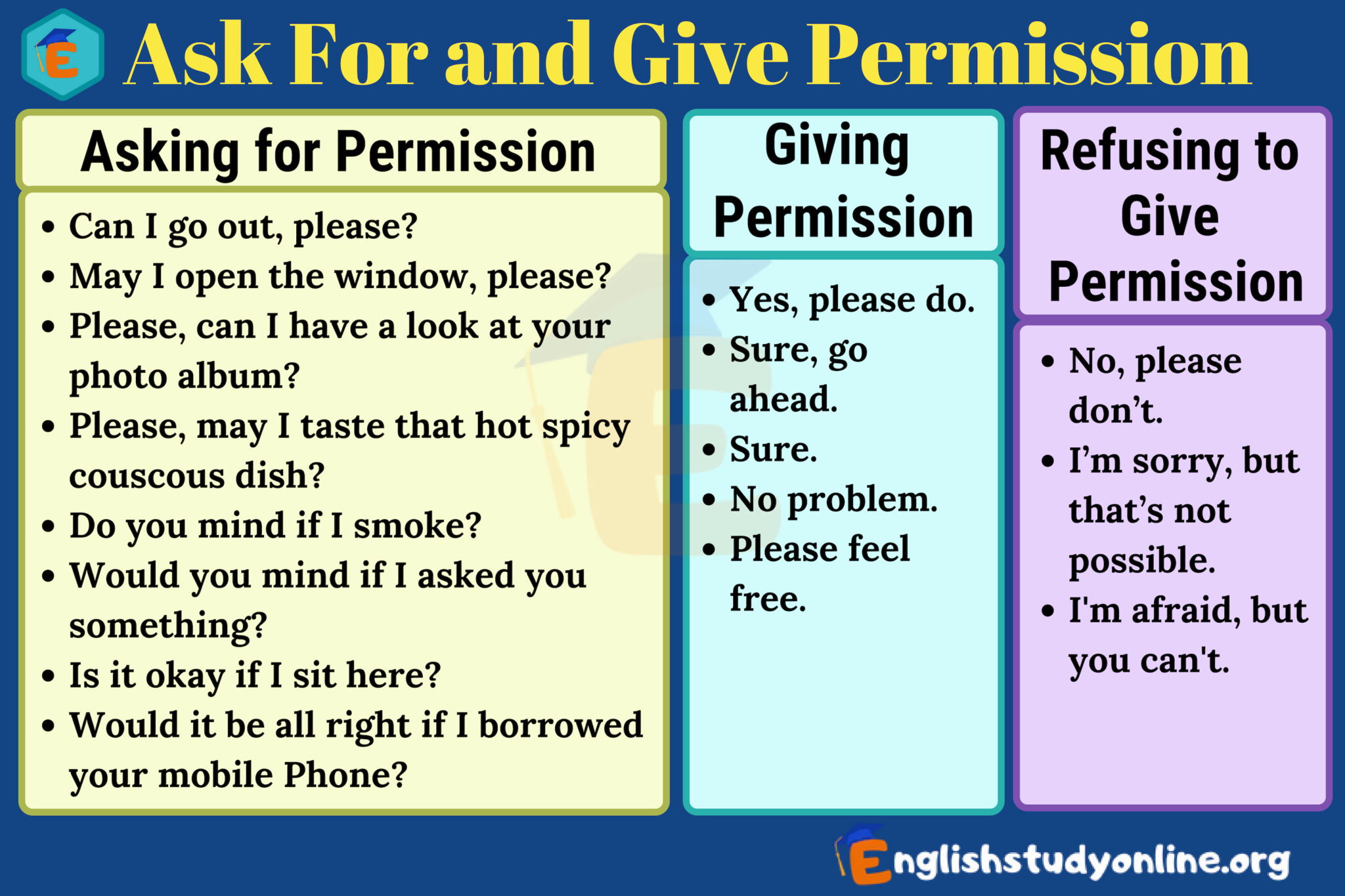
Different Ways Of Asking For Permission And Responding English Study

Modal Verbs CAN Using And Example Sentences English Study Here

When you are asking for permission to do something you use can or could Use can in a simple and direct way For example Can I ask a question Can expresses a strong possibility For example I can win this game I have played it before Could You use could to say that someone was allowed to do something in the past

Asking for permission 1 Asking for permission 2 Giving permission We use can to give permission You can go home now You can borrow my pen if you like may is a more formal and polite way of giving permission You may go home now We use can to say that someone has permission to do something We can go out whenever we want

We use would like a lot for offers It s very useful for different situations Would you like to come to our house for dinner Would you like some cake Would you like to celebrate Chinese New Year with us For more informal invitations you can use can get Get means buy in this context Can I get you a drink

Means that you give the company permission to collect information about you In other words you allow the company to save your email address or your computer s address But may has multiple

You should also know that can is seen as an informal way of asking permission Using could in a sentence Use could if you re describing someone s ability in the past tense Consider could a realist when it comes to possibilities something might happen but it also might not Could is seen as more formal when asking for permission Can vs
Both Can and Could are Modal Verbs In general Could is considered more polite or formal that Can CAN The three main uses of Can are 1 ability 2 possibility and 3 permission However there are some other used of Can as we will see below 1 To express ability Can means to be physically able to do something OR to know how to do something Birds can fly Example Sentences As long as you live here you can use all my stuff You can join the party tonight not too late Please be home at 2 00 He has lived in Germany for 10 years so he can speak German very well Can you get me a glass of water from the kitchen My cat will run out can you please close the door
MODAL VERBS CAN CAN is one of the most used modal verbs in English Can is an auxiliary verb modal auxiliary verb It can be used to express Ability Possibility Permission Request Offer General Structure of CAN in a Sentence POSITIVE FORM Subject CAN Verb first form of the verb NEGATIVE FORM Subject CAN NOT CAN T Verb first